
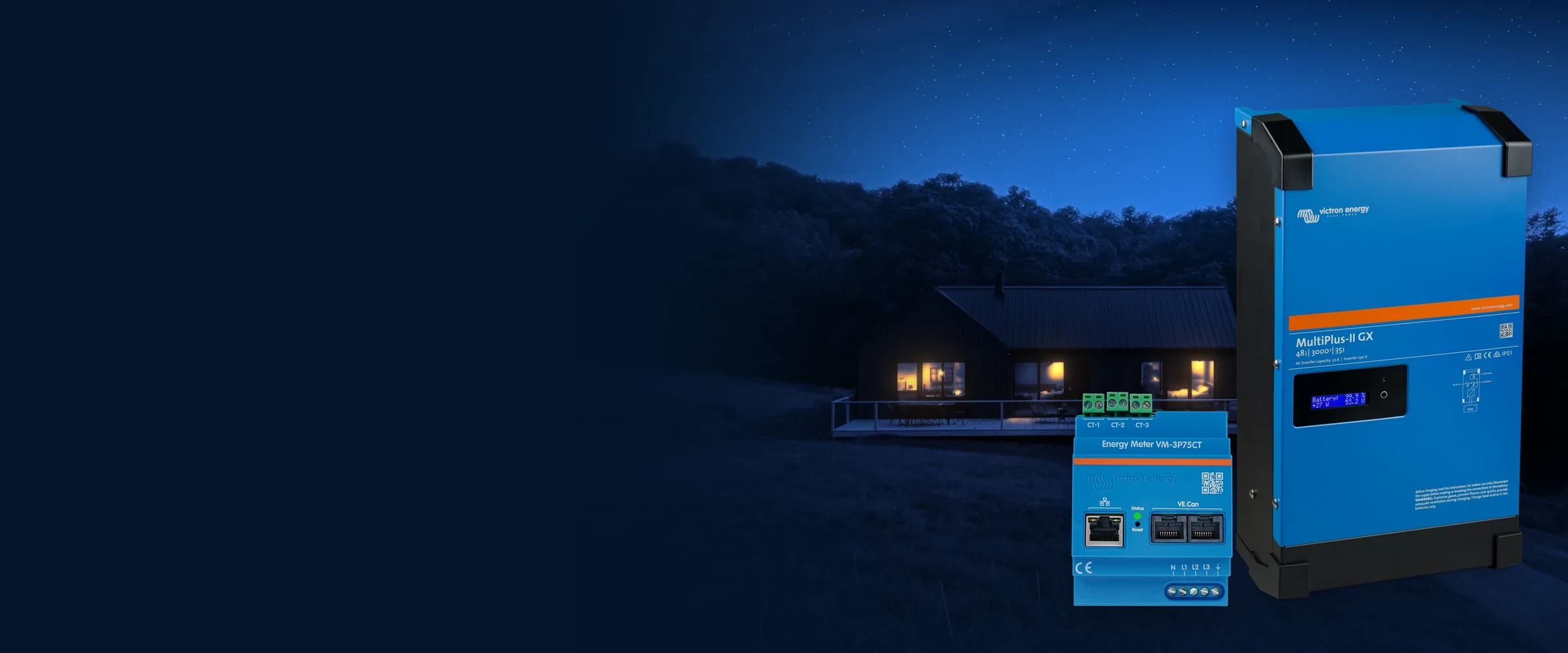
Home energy storage (ESS)
Enter your annual electricity consumption, panel power and city. Using PVGIS solar irradiation data, we will calculate how much energy you use directly, how much the storage delivers at different capacities and what capacity makes sense — month by month.
Model assumptions
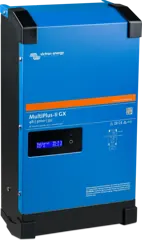 MultiPlus-II GXinverter/charger and GX
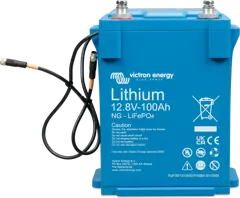 Lithium NGalso 51.2 V for 48 V systems
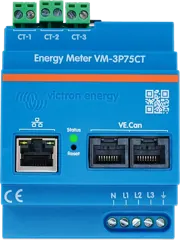 Energy Meter VM-3P75CTgrid connection metering
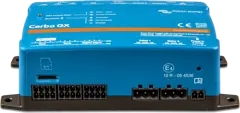 Cerbo GXESS and VRM control
Production: PVGIS data (Joint Research Centre, European Commission), version 5.3, PVGIS-SARAH3 database for 2005–2023, panels at the optimum south-facing angle, 14% system losses — average daily production from 1 kWp in each month. These are the same data as in the energy balance calculator.
Average day: for each month we calculate an average day. We spread consumption evenly across the year; the stated share of consumption falls in the production hours and is covered directly from the panels. Surplus charges the battery bank, which then supplies energy in the evening and at night. What the battery bank cannot take — goes to the grid; what it cannot cover — you take from the grid.
Battery bank: we use 80% of capacity (as in the energy balance — the LiFePO4 Smart datasheet gives cycle life at 80% discharge) and assume 90% efficiency for a full charge–discharge cycle through the inverter (maximum efficiency of the MultiPlus-II 48 V is 95–96% one way).
Sensible capacity: the smallest battery bank that gives at least 90% of the energy that a 20 kWh battery bank would give — increasing capacity further changes little.
What the model does not include: cloudy and sunny days (it uses the average), changes in consumption during the year (for example, a heat pump in winter), water heating with surplus energy, tariffs and settlement with the grid, or inverter power limits. The result shows the direction, not a guarantee of savings. How ESS works and how to set it up: house diagram with energy storage and ESS draws from the grid.
Sources
Content checked against Victron Energy documentation (datasheets and manuals) — status as of 23 September 2026. Report an error in the content · Correction log