
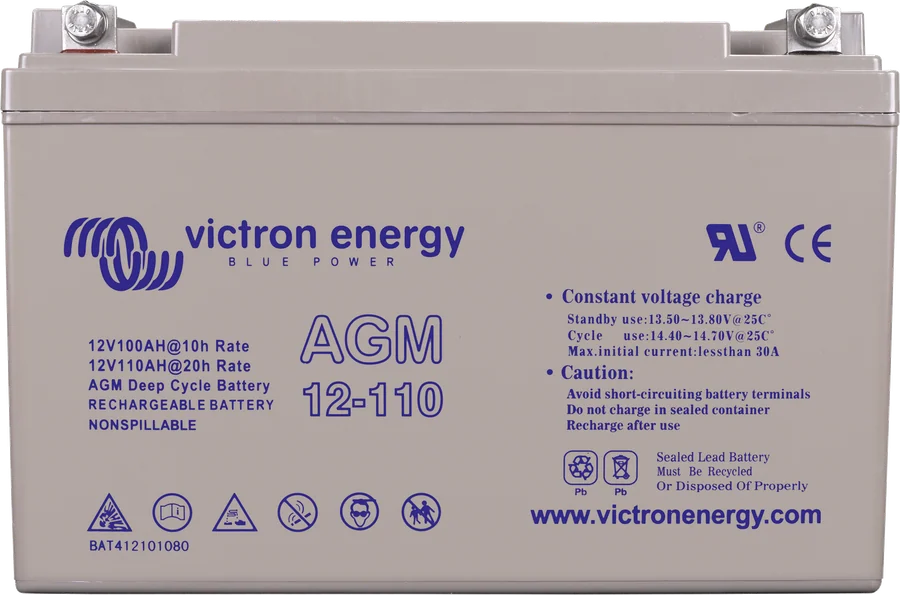
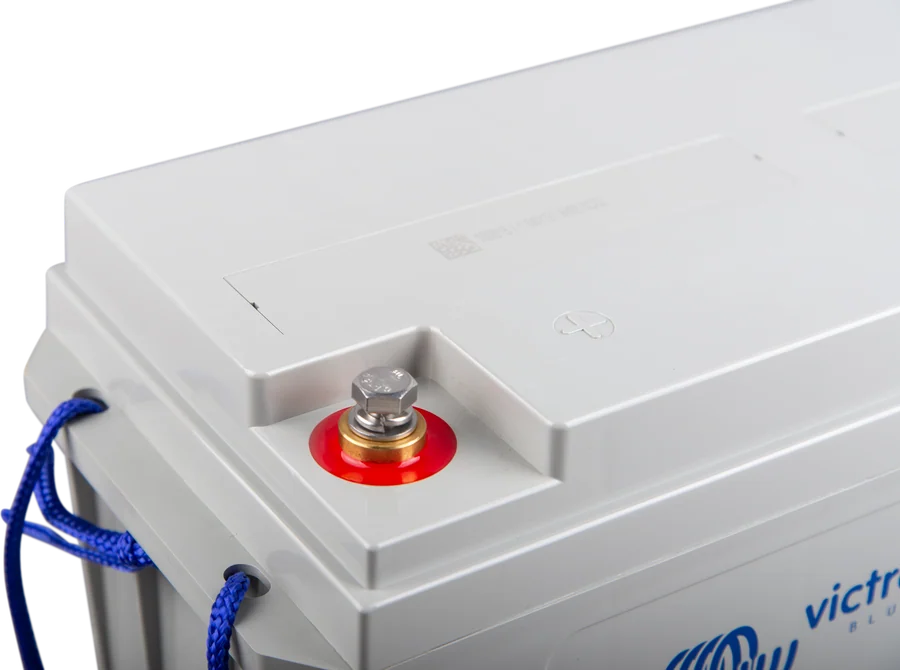
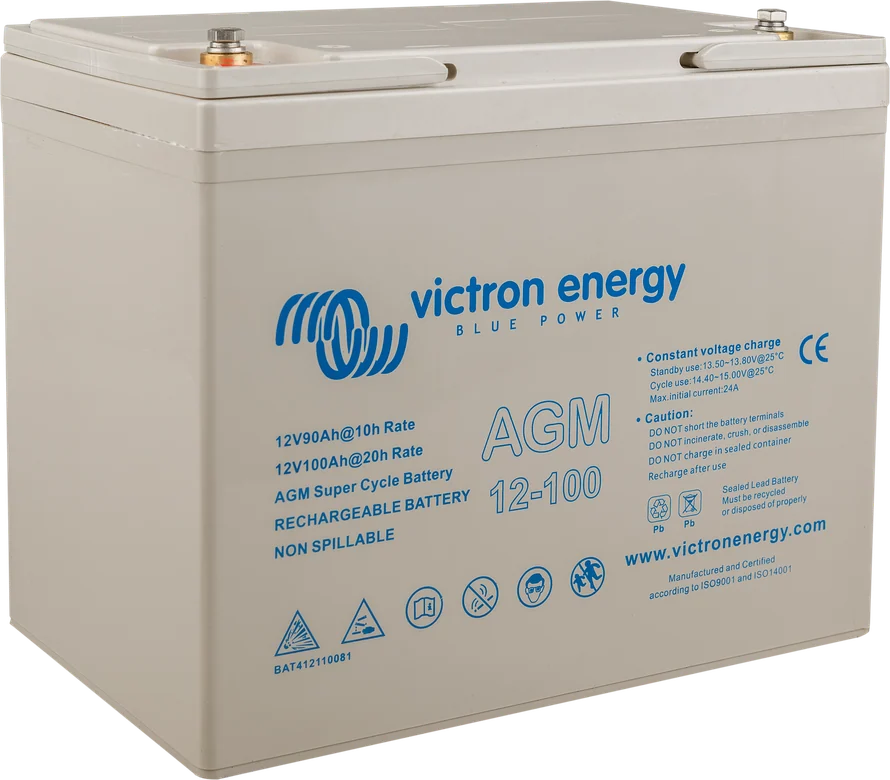
Victron AGM Deep Cycle 12 V 110 Ah battery
Victron AGM, Gel, Super Cycle and Lead Carbon batteries
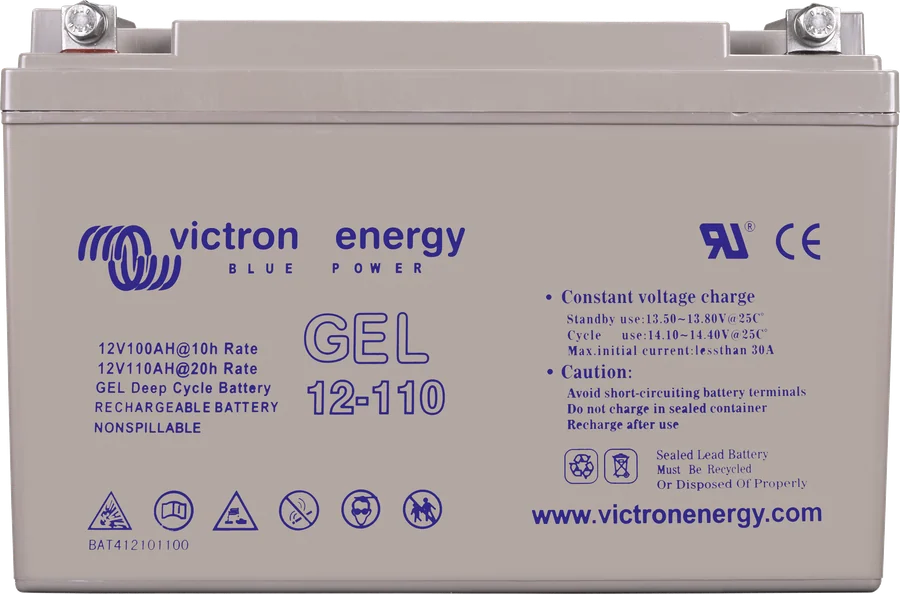
Four families of sealed lead-acid batteries (VRLA): AGM Deep Cycle for high currents, Gel Deep Cycle with the longest service life, AGM Super Cycle resistant to deep discharge, and Lead Carbon for partial state of charge operation. They do not need topping up with water and can operate in any position except upside down.
- 12 V i 6 V
- 8–265 Ah
- VRLA
- maintenance-free
- 3-stage charging
Cheaper energy storage than lithium
Lead-acid batteries still make sense where price per kWh, operation at low temperatures without a heating system, and simple installation matter — in cabins, on boats, for backup power and in telecoms. Victron divides them into four families with distinctly different characteristics.
All are sealed (VRLA): the electrolyte is trapped in a glass mat (AGM) or gelled (Gel), so there is no need to top up with water. The manufacturer emphasises that the rated capacity refers to a 20-hour discharge — at higher currents it is markedly lower.
- AGM handles high currents better — it is also suitable for engine starting,
- Gel lasts longer both in float use and in cyclic use,
- self-discharge below 2% per month at 20°C means they can be stored without recharging.

What you should know about these batteries
Maintenance-free
VRLA design: electrolyte in glass mat or gelled. No water is added, and the battery can operate in any position except upside down.
Capacity rated over 20 h
The rated Ah applies to discharge at 0.05 C for 20 hours. With a 5-hour discharge, 85% (AGM) or 80% (Gel) remains, and in one hour — 65% and 61%.
High surge currents
For 5 seconds AGM delivers current equal to 8 C, Gel 7 C. That is why AGM is also recommended for engine starting, and Gel for cyclic use.
Low self-discharge
Below 2% per month at 20°C. Every extra 10°C doubles the rate — in hot weather you need to recharge more often.
Cold reduces capacity
Capacity falls significantly at low temperatures — unlike with lithium batteries, this does not risk damage, but you need to take it into account in the energy balance.
Depth of discharge matters
The same AGM battery gives 400 cycles at 80% discharge, 600 at 50% and 1,500 at 30%. Gel gives 500, 750 and 1,800 respectively.
Temperature compensation
Charge voltage is reduced by 4 mV per cell for each degree — that is 24 mV/°C for a 12 V battery, with 25°C as the reference point.
Storage mode
Victron chargers drop to float voltage after absorption is complete, and after a day without discharge — to an even lower voltage, limiting positive plate corrosion.
How they differ
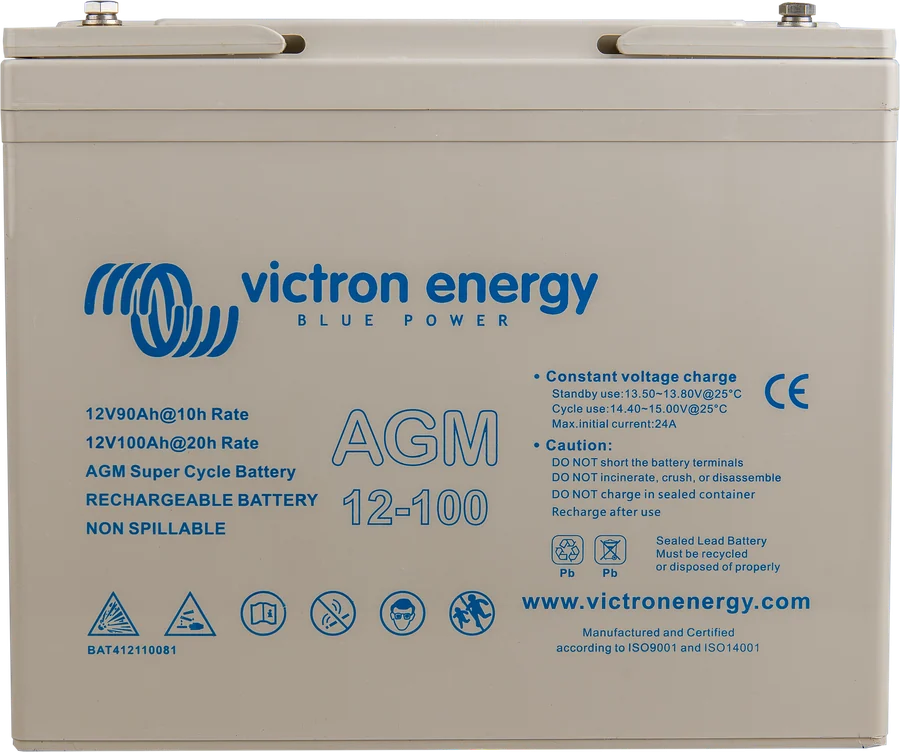
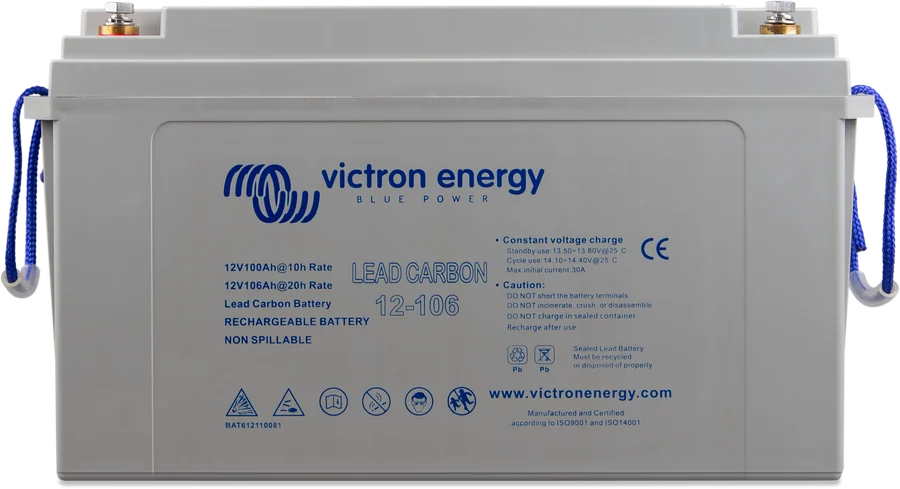
| Family | 100% DoD cycles | 60% / 50% DoD cycles | 40% / 30% DoD cycles | Float operation (20°C) |
|---|---|---|---|---|
| AGM Deep Cycle | — | 600 at 50% | 1,500 at 30% | 7–10 years |
| Gel Deep Cycle | — | 750 at 50% | 1,800 at 30% | 12 years |
| AGM Super Cycle | ≥ 300 | ≥ 700 at 60% | ≥ 1,000 at 40% | — |
| Lead Carbon | ≥ 500 | ≥ 1,000 at 60% | ≥ 1,400 at 40% | — |
The manufacturer states the number of cycles for AGM and Gel at 80% discharge: 400 and 500 respectively. Super Cycle and Lead Carbon cycles were measured at 0.2 C₂₀ current, at 100% DoD with about two hours’ standstill in the discharged state before charging — it is this standstill that destroys ordinary batteries.
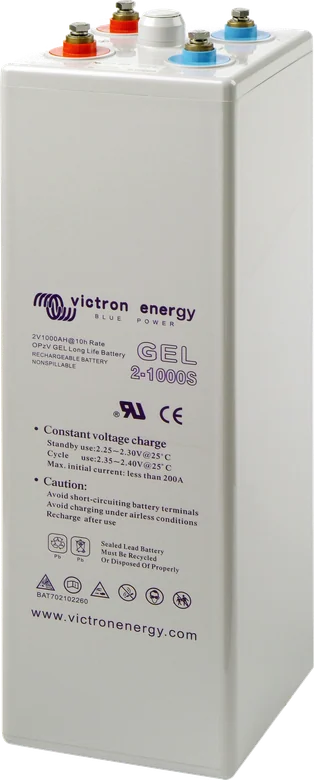
In addition to standard monobloc batteries, the range also includes OPzV cells — gel, with tubular plates, built as individual 2 V cells with very large capacities. They are used where very long service life matters: in telecommunications and large standby storage systems.
According to the label, OPzV cells are charged at 2.25–2.30 V per cell in float operation and 2.35–2.40 V in cyclic operation (at 25°C), and the initial current should not exceed 200 A.
Battery in a typical installation
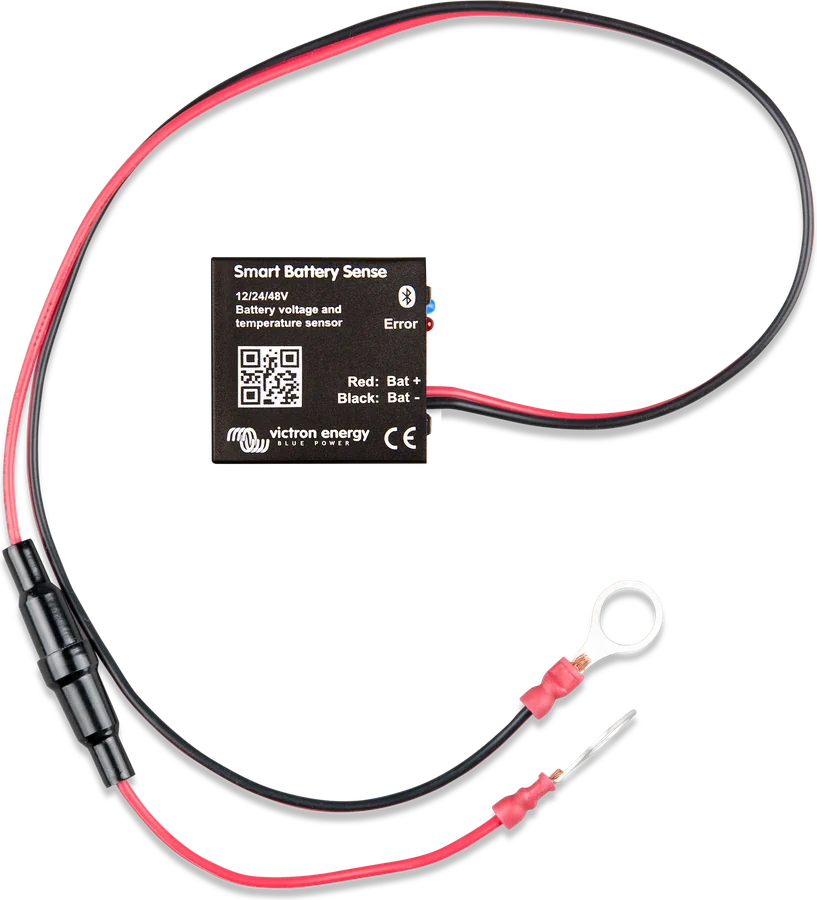
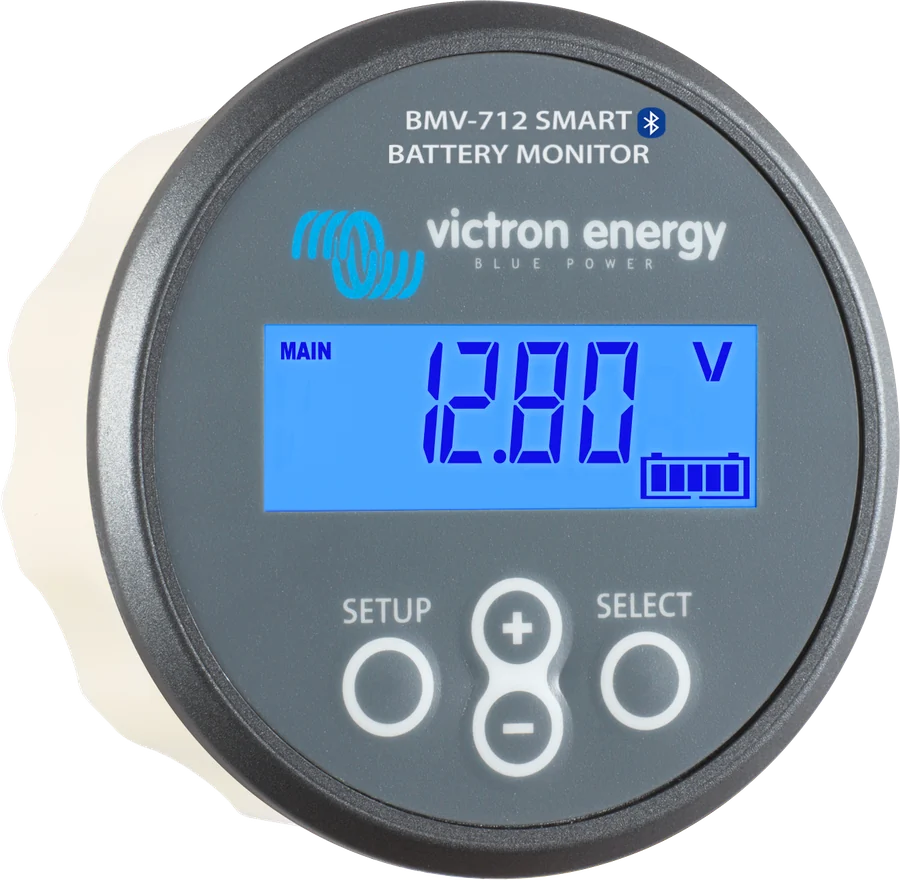
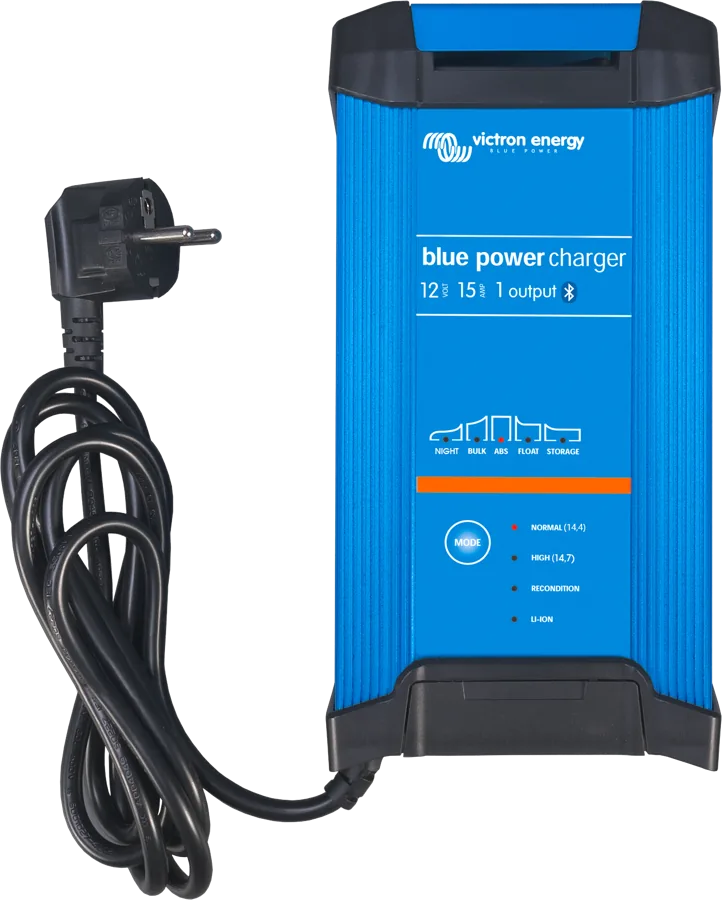
A lead-acid battery sits between the charging sources and the loads. In cyclic operation, it is worth adding battery voltage and temperature measurement — the charging voltages depend on it. Hover over the diagram element or touch it. Simplified diagram.
- Set the battery typeAGM and Super Cycle: absorption 14.2–14.6 V. Gel and Lead Carbon: 14.1–14.4 V.
- Limit the currentPreferably to 0.2 C, i.e. 20 A for every 100 Ah of capacity.
- Measure the temperatureBelow 10°C and above 30°C, temperature compensation is necessary.
- Choose the depth of dischargeThe shallower the discharge, the more cycles you get — the difference can be several times over.
- Do not leave it dischargedLead in a low state of charge sulphates; charge it immediately after discharge.
Voltages for 12 V batteries
Manufacturer values for a reference temperature of 25°C. For 24 V batteries, voltages are doubled; for 48 V, multiplied by four.
| Family | Absorption — cyclic operation | Absorption — fast charging | Float | Storage |
|---|---|---|---|---|
| AGM Deep Cycle | 14.2–14.6 V | 14.6–14.9 V | 13.5–13.8 V | 13.2–13.5 V |
| AGM Super Cycle | 14.2–14.6 V | 14.6–14.9 V | 13.5–13.8 V | 13.2–13.5 V |
| Gel Deep Cycle | 14.1–14.4 V | — | 13.5–13.8 V | 13.2–13.5 V |
| Lead Carbon | 14.1–14.4 V | — | 13.5–13.8 V | — |
Three charging stages
First comes the bulk stage — the charger delivers full current until the voltage reaches the absorption value. Then absorption: the voltage is held high to complete the battery in a reasonable time. Finally float: the voltage is reduced to a level that compensates for self-discharge.
The manufacturer notes that a fixed absorption time is harmful: after shallow discharge, full absorption overcharges the battery. That is why Victron chargers calculate the absorption time from the length of the bulk stage, and after a day without discharge they drop to a lower storage voltage, raising it briefly to the absorption level once a week.
How to extend battery life
In a low state of charge, lead sulphate crystals on the negative plate grow and harden, permanently reducing capacity. Standard AGM and Gel batteries must be charged immediately after discharge; Super Cycle and Lead Carbon are more tolerant of this kind of use.
Necessary when the battery operates for a long time below 10°C or above 30°C — and also when charging current exceeds 0.2 C, because the battery itself then heats up by more than 10°C. The recommended value is −4 mV per cell per degree, i.e. −24 mV/°C for a 12 V battery.
For a 100 Ah battery, that is 20 A. Faster charging shortens charging time, but at the cost of service life — higher voltage and current accelerate positive plate corrosion.
- Cool location. Moving from 20°C to 30°C cuts AGM float life from 7–10 years to 4 years, and Gel from 12 to 6.
- Shallower cycles. Limiting discharge from 80% to 50% raises the number of AGM cycles from 400 to 600, and to 30% — up to 1,500.
- Storage. Self-discharge below 2% per month at 20°C allows the battery to be stored without a charger, but in warm conditions the rate doubles every 10°C.
Which battery for what
AGM Deep Cycle
Engine starting, anchor windlasses, short peak loads. For 5 seconds it delivers a current equal to 8 C.
400 cycles @ 80% DoDGel Deep Cycle
Float and cyclic operation in installations where the battery just needs to last for years. 12 years of float operation at 20°C.
750 cycles @ 50% DoDAGM Super Cycle
When the battery is sometimes discharged to zero or regularly to 60–80%. It withstands at least 300 100% DoD cycles.
700 cycles @ 60% DoDLead Carbon
Installations where the battery rarely reaches 100% — off-grid PV, hybrid systems. Less sulphation, higher efficiency.
500 cycles @ 100% DoDIf you expect daily deep cycles for many years, it is worth comparing the cost with a lithium battery — LiFePO₄ Smart or Lithium NG costs more at the start, but lasts many times more cycles and delivers full capacity at high current.
Typical problems
Most problems with lead-acid batteries come from three things: poor charging voltages, heat, and operation at partial state of charge.
The battery lasts for less and less time
Most often this is sulphation after operation at partial state of charge or the result of cycles that are too deep. Check whether the charger reaches absorption voltage and whether the battery type is set correctly.
Capacity lower than on the case
That is normal: the nominal Ah rating refers to a 20-hour discharge. Over 5 hours, 85% remains (AGM) or 80% (Gel), over one hour — 65% and 61%, and at constant power (inverter) the drop is even faster.
In winter the capacity drops noticeably
The capacity of a lead-acid battery falls sharply at low temperatures. Take this into account in the energy balance or move the battery to a warmer place.
The battery heats up while charging
Current above 0.2 C raises the temperature by more than 10°C. Reduce the charging current or enable temperature compensation.
The battery swells or leaks
A sign of overcharging — too high an absorption voltage or no temperature compensation in a warm place. Check the charger settings and take the battery out of service.
After several months of standing it will not start
Self-discharge is less than 2% per month at 20°C, but at 30°C it is already twice as much, and at 40°C — four times. Before long-term storage, charge fully and keep it cool.
Series-connected batteries drift apart in voltage
In 24 V and 48 V systems, the Battery Balancer helps by equalising the voltage of successive batteries and signalling differences.
I don’t know which type to set on the charger
AGM and Super Cycle: absorption 14.2–14.6 V. Gel and Lead Carbon: 14.1–14.4 V. Float in both cases 13.5–13.8 V (for 12 V batteries).
Frequently asked questions about AGM and Gel batteries
How does AGM differ from Gel?
AGM has the electrolyte absorbed in a glass mat and handles high currents better — it is even suitable for engine starting. Gel has a gelled electrolyte; at high current it delivers less capacity, but lasts longer: 12 years of float service at 20°C versus 7–10 years for AGM.
How many cycles will such a battery last?
It depends on the depth of discharge. AGM Deep Cycle: 400 cycles at 80%, 600 at 50% and 1,500 at 30%. Gel Deep Cycle: 500, 750 and 1,800 respectively.
What is AGM Super Cycle for?
For installations where discharge to 100% happens, or regular discharge to 60–80%. The manufacturer confirms at least 300 cycles at 100% DoD — including a two-hour pause in a discharged state, which destroys ordinary batteries in fewer than 100 cycles.
What does a Lead Carbon battery offer?
Carbon in the negative plate limits sulphation in partial state of charge operation, allows charging at a lower voltage and increases efficiency. Manufacturer tests confirm at least 500 cycles at 100% DoD.
At what current should you charge?
Ideally no more than 0.2 C, that is 20 A per 100 Ah. Above this value the battery heats up by more than 10°C and temperature compensation is necessary.
Do you need to top up with water?
No. These are sealed batteries (VRLA) — the electrolyte is trapped in a glass mat or gelled, and maintenance is limited to correct charging.
How do you set temperature compensation?
The recommended value is −4 mV per cell for each degree, that is −24 mV/°C for a 12 V battery, referenced to 25°C. Compensation is needed when the battery operates for a long time below 10°C or above 30°C.
Lead or lithium?
Lead is cheaper upfront and does not require a BMS or heating when charging in frost. Lithium withstands many times more cycles, delivers full capacity at high current and weighs less. With daily deep cycles, the cost per cycle is usually in lithium’s favour.
Manufacturer documentation
Content compared with Victron Energy documentation (datasheets and manuals) — current as of 20 September 2026. Report a content error · Correction log